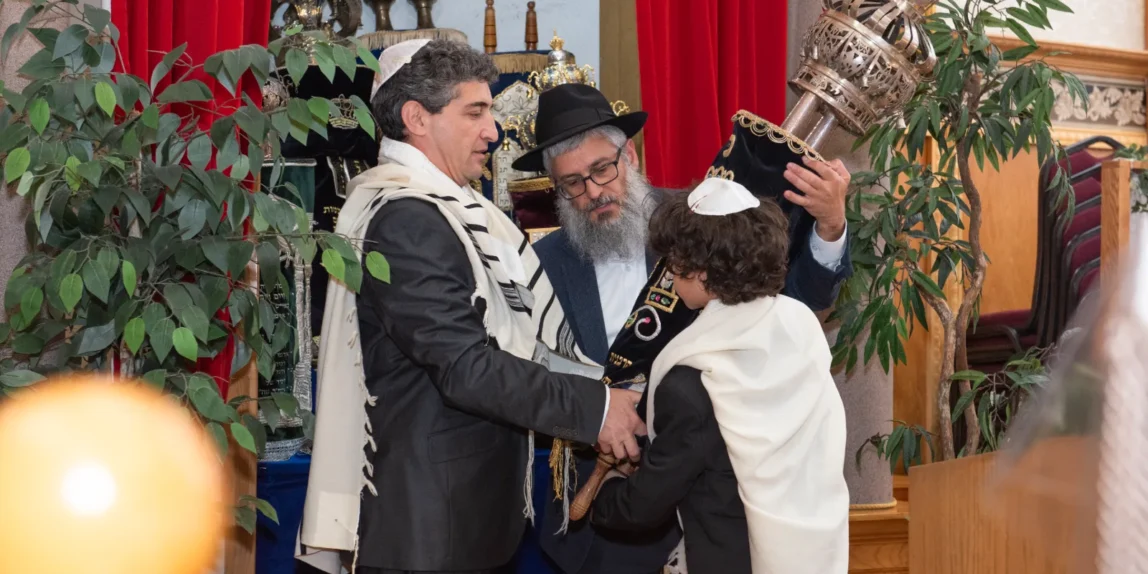
Synagogue photography rules can shape the entire morning of a Bar or Bat Mitzvah. Before you decide when the photographer arrives, where family portraits happen, or whether service moments can be documented, you need clear permission from the congregation itself.
That is especially true in North Jersey, where families may be planning around a Friday portrait session, a Shabbat morning service, an afternoon break, and an evening party at a separate venue. The best photography plan is not the one that assumes access. It is the one built around the synagogue’s actual policy, with enough time and flexibility to make respectful, polished images within those boundaries.
This guide is written from a photographer’s point of view. Customs, terminology, schedules, and permissions vary by family, congregation, and movement. Religious, ritual, or sanctuary-rule questions should always go to your rabbi, cantor, synagogue office, or event coordinator.
Start With Permission Before Building the Timeline
The first question is simple: does the synagogue allow photography during the service? Some congregations may allow quiet photography from a fixed location. Some may permit photography before the service but not once prayers begin. Others may not allow cameras in the sanctuary during Shabbat services at all.
None of those answers is unusual. A photographer who works with Bar and Bat Mitzvah families should be able to adapt to any of them, but the answer needs to come early. If photography is restricted during the service, we can shift more attention to portraits before the service, guest arrivals where permitted, sanctuary details if allowed, and the evening celebration.
Parents often start with the larger question of coverage: ceremony, portraits, and party. Pastel Image’s Bar and Bat Mitzvah photography approach is a helpful place to see how those parts of the day fit together. Once the synagogue policy is clear, the coverage plan can become much more specific.
Ask Where the Photographer May Stand
If photography is allowed during any part of the service, location matters as much as permission. A synagogue may allow the photographer only from the back of the sanctuary, from a side aisle, from a balcony, or from one designated spot. Movement may be limited once the service begins.
From a photography standpoint, this affects lens choice, camera settings, and expectations. If the photographer is working from the back of the room, the images will feel more observational. If side access is allowed, there may be more opportunity for facial expressions and family reactions. If movement is restricted, it is better to know that in advance than to discover it while the service is already underway.
Ask whether the photographer may enter the sanctuary before guests arrive to check sightlines and light. Even a few minutes helps. It lets the photographer see where the bimah is positioned, where family members will sit, how bright the room is, and whether there are any areas that should be avoided.
Confirm Flash, Sound, and Equipment Limits
Flash is one of the most common restrictions. Many synagogues that allow service photography still prohibit flash, especially during prayer or Torah reading. That is a reasonable boundary and something a professional photographer should be prepared for.
Low-light sanctuary photography requires quiet equipment, fast lenses, careful exposure, and a calm working style. It also requires realistic expectations. A no-flash image from the back of a dim sanctuary will not look like a posed portrait taken near a window before the service. Both can be meaningful, but they are different kinds of photographs.
Also ask about sound and equipment. Some congregations may prefer silent shutter mode. Some may not want light stands, tripods, or bags placed in aisles. Some may require the photographer to keep gear in a specific room or away from worship areas. These details sound small, but they help the morning feel smooth and respectful.
Plan Portraits Around Sanctuary Access
Family portraits are often the most controlled and useful part of the morning. They can include the Bar or Bat Mitzvah child alone, parents, siblings, grandparents, immediate family, and selected extended-family combinations. Depending on synagogue permission, portraits may happen in the sanctuary, near the bimah, in a lobby, outside the building, or in another approved room.
If the family wants portraits with ritual objects or in specific sanctuary locations, ask the synagogue exactly what is allowed, who needs to be present, and when it may happen. A photographer should never assume that a Torah, ark, bimah, or sanctuary area is available for photographs. That approval belongs to the congregation.
Timing matters too. Some families schedule portraits before guests arrive. Others arrange an optional synagogue session on a different day, often before or after Shabbat depending on the congregation’s rules and family schedule. If you are still shaping the day, Pastel Image’s Bar Mitzvah photography timeline guide walks through how the synagogue portion and evening celebration can be planned as two distinct parts of the same event.
Find Out Who Approves the Photography Plan
Do not rely on a vague “it should be fine.” Ask who has final approval. It may be the rabbi, cantor, executive director, synagogue administrator, event coordinator, or a committee contact. In some congregations, one person approves sanctuary access while another handles building logistics.
Once you know the right contact, send a short written summary. Include the date, service time, requested portrait time, photographer arrival time, whether photography is requested during the service, and any specific locations you hope to use. Written confirmation helps everyone work from the same plan.
This is also the time to ask about insurance certificates, vendor check-in procedures, parking, security, and arrival entrances. Some synagogues require a certificate of insurance from vendors. Some have specific rules about when outside vendors may enter the building. These are not glamorous details, but they prevent avoidable stress on the morning of the mitzvah.
Build a Coverage Plan That Respects the Room
Once the synagogue’s rules are clear, the photographer can build the coverage around them. If service photography is allowed, the plan may focus on quiet, unobtrusive documentation from approved positions. If photography is not allowed during the service, the plan may lean more heavily on pre-service portraits, family groupings, details, exterior photographs, and reception storytelling later in the day.
There is no need to force the day into a template. A North Jersey Bar or Bat Mitzvah might include a synagogue service in the morning, a Kiddush or lunch, a long afternoon break, and a party in Bergen, Essex, Morris, Passaic, or another nearby area in the evening. Another family may keep everything at the synagogue. The right plan follows the actual schedule.
The most helpful thing parents can do is gather the rules early and share them with the photographer before finalizing coverage. That lets us talk honestly about what can be photographed, what should be scheduled separately, how much portrait time is needed, and where the best images are likely to happen.
Synagogue Photography Questions to Send Before the Mitzvah
| Question | Why It Matters for Photography |
|---|---|
| Is photography allowed during the Bar or Bat Mitzvah service? | This determines whether service coverage is possible or whether coverage should shift to portraits and other permitted moments. |
| If photography is allowed, where may the photographer stand? | Position affects image style, lens choice, movement, and what moments can be documented clearly. |
| Is flash allowed at any point in the sanctuary? | Flash restrictions affect lighting approach and expectations for service images. |
| May portraits be taken in the sanctuary before or after the service? | This helps determine where family portraits can happen and how much time to schedule. |
| Are portraits with the Torah, bimah, ark, or other sanctuary areas permitted? | Access varies by congregation and should be approved directly by synagogue leadership. |
| Can portraits be scheduled before or after Shabbat, if needed? | Some families may need a separate portrait session depending on service-day restrictions. |
| Who approves the photography plan? | A clear contact prevents mixed messages between the family, clergy, office, and photographer. |
| Does the synagogue require a certificate of insurance? | Many venues require vendor documentation before allowing access. |
| When may the photographer arrive, and where should they check in? | Arrival logistics keep the morning calm and avoid interrupting synagogue staff. |
FAQ
Can we take photos during the actual Bar Mitzvah service?
It depends entirely on the synagogue. Some congregations may allow quiet photography from a fixed spot, some may restrict flash or movement, and some may not allow photography during the service at all. Ask the synagogue directly before building your photography timeline.
What if our synagogue does not allow service photography?
You can still have a strong gallery. Depending on permission, the plan may include portraits before the service, family groupings, sanctuary or exterior photographs, arrival candids, and full evening celebration coverage. The key is to plan those pieces intentionally instead of hoping for access on the day.
Should we schedule synagogue portraits on a different day?
Sometimes that is the cleanest option, especially if the service morning is tight or photography is restricted on Shabbat. Whether that is allowed depends on the congregation, so ask the synagogue office or clergy what dates, times, and locations may be available.
Who should talk to the synagogue about photography rules?
The family should confirm the rules directly with the rabbi, cantor, synagogue office, or event coordinator. Your photographer can help translate those rules into a practical coverage plan, but religious and sanctuary permissions should come from the congregation.
If you are planning a Bar or Bat Mitzvah in North Jersey, share your synagogue’s photography rules before we finalize the schedule. Pastel Image can help build a coverage plan around the actual permissions, the family portrait list, travel time, and the evening celebration, so the photography fits the day respectfully from the start.
For more practical planning guidance, explore Bar Mitzvah Photography NJ: A Day-of Timeline Guide and Bar Mitzvah Photography NJ | Pastel Image.